Discover why dancing may help reduce dementia risk more than other physical activities. Learn how dance strengthens memory, coordination, social connection, and overall brain health as we age.
Why Dancing May Be the Ultimate Brain Exercise
In 2003, researchers led by Joe Verghese at Albert Einstein College of Medicine published a landmark study in the The New England Journal of Medicine that continues to shape conversations around aging and brain health.
The researchers followed older adults for an average of five years to explore which leisure activities were linked to a lower risk of developing dementia.
The findings were fascinating.
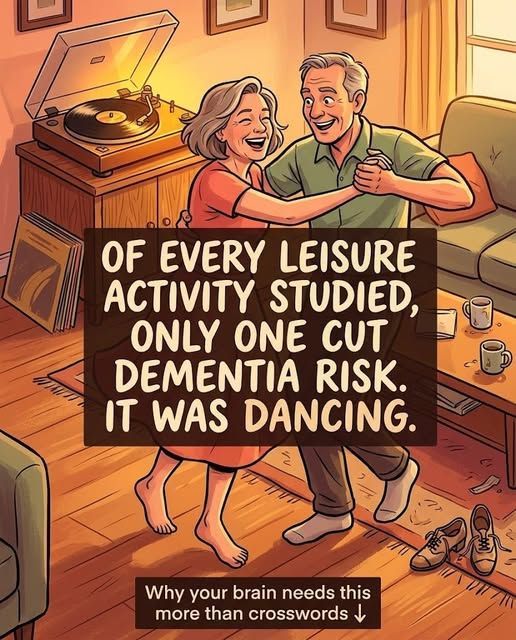
Reading helped protect the brain. Crossword puzzles showed benefits. Playing a musical instrument was also associated with better cognitive health. But among all physical activities studied, one stood out above the rest: dancing. Frequent dancing was associated with a significantly lower risk of dementia compared to not dancing. Surprisingly, other physical activities such as jogging or gym workouts did not show the same striking effect.
Why Is Dancing So Powerful for the Brain?
Researchers believe dancing is unique because it challenges the brain in multiple ways at the same time.
When you dance, your brain must:
- Coordinate body movements
- Stay in rhythm with music
- Anticipate and respond to a partner
- Adapt to changing patterns and tempo
- Remember movement sequences
- Process social and emotional cues
Unlike activities that mainly focus on one or two cognitive functions, dancing activates many brain systems simultaneously - all while engaging the body and encouraging social interaction.
This combination of movement, memory, rhythm, emotion, and connection may explain why dance appears to offer such strong brain-supporting benefits.
Dancing Combines Physical Activity With Mental Stimulation
Most forms of exercise improve circulation, heart health, and mobility. These benefits alone can support healthy aging.
But dance goes further. It blends cardiovascular movement with cognitive training. Your brain is constantly making decisions, predicting motion, and adapting in real time. This creates a rich mental workout that few activities can match.
In many forms of dance, there is also a strong social component. Social engagement itself has been linked to better cognitive health and lower rates of loneliness and depression in older adults.
You Don’t Need Ballroom Lessons to Benefit
One of the best things about dancing is that it’s accessible.
You do not need professional lessons or advanced skills to experience the benefits. Any form of joyful movement to music can help stimulate the brain and body.
Examples include:
- Line dancing
- Salsa dancing
- Swing dancing
- DanceFIT Classes
- Dancing at family gatherings
- Moving around the kitchen with your grandchild
The goal is not perfection. The goal is engagement, enjoyment, and movement.
Dance and Healthy Aging
As we age, many people focus on walking for physical health - and walking is excellent exercise. But adding dance into a weekly routine may provide an extra layer of support for memory, coordination, and emotional wellbeing.
Dance encourages creativity, spontaneity, and connection. It reminds us that exercise does not always need to feel like a chore.
Sometimes, one of the healthiest things we can do for the brain is simply move to music.
Final Thoughts
The research around dance and dementia prevention continues to grow, but one message is already clear: staying mentally, physically, and socially active matters.
Dancing combines all three in a uniquely powerful way.
So perhaps the better question is not whether you are a good dancer.
It is this:
When was the last time you let your body move to music?