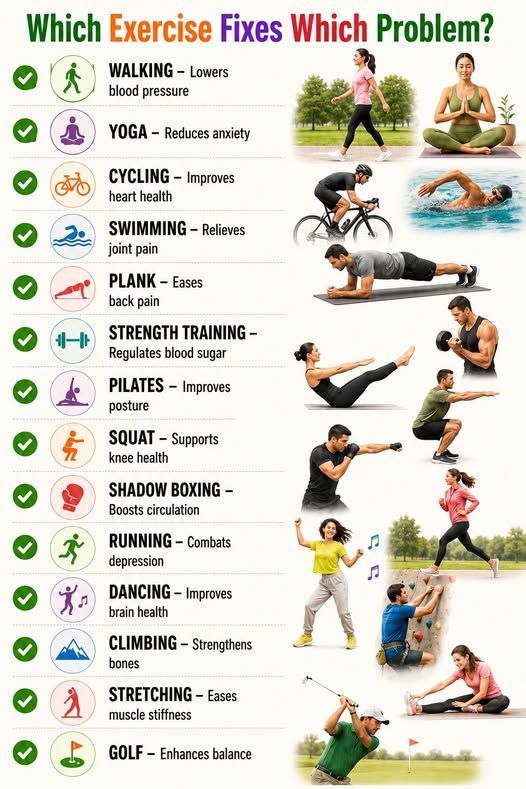
Discover which exercises help specific health problems, from anxiety and back pain to heart health and depression. Learn how walking, Pilates, swimming, strength training, and more can improve your overall wellness.
Which Types of Exercises Fix Which Problems? A Complete Guide to Fitness for Better Health
Exercise is one of the most effective natural ways to improve physical and mental health. Different forms of exercise target different problems, making it easier to choose the right activity for your personal wellness goals. Whether you want to reduce anxiety, improve heart health, relieve joint pain, or boost circulation, there’s an exercise designed to help.
In this guide, we’ll explore which types of exercises fix specific health problems and how adding them to your routine can transform your life.
1. Walking Can Help Lower Blood Pressure
Walking is one of the simplest and most accessible forms of exercise. A brisk daily walk improves blood circulation, strengthens the heart, and helps reduce high blood pressure.
Benefits of Walking
- Improves cardiovascular health
- Helps maintain a healthy weight
- Reduces stress levels
- Increases energy and stamina
Best Practice
Aim for 30 minutes of brisk walking at least five days a week for optimal results.
2. Yoga May Help to Reduce Anxiety
Yoga combines movement, breathing, and mindfulness, making it highly effective for reducing anxiety and stress.
Benefits of Yoga
- Promotes relaxation
- Improves flexibility
- Enhances mental clarity
- Helps regulate breathing
Best Yoga Styles for Anxiety
- Hatha Yoga
- Yin Yoga
- Restorative Yoga
3. Cycling Can Improve Heart Health
Cycling is a low-impact cardio exercise that strengthens the heart and lungs while improving endurance.
Benefits of Cycling
- Boosts cardiovascular fitness
- Burns calories efficiently
- Strengthens leg muscles
- Improves stamina
Indoor cycling and outdoor biking are both excellent options for heart health improvement.
4. Swimming Can Help RelieveJoint Pain
Swimming provides a full-body workout without putting pressure on the joints, making it ideal for people with arthritis or joint discomfort.
Benefits of Swimming
- Reduces joint stress
- Improves flexibility
- Strengthens muscles
- Enhances lung capacity
Water aerobics can also be a great low-impact alternative.
5. Plank Exercises Can Ease Back Pain
Planks strengthen the core muscles that support the spine, helping reduce lower back pain and improve posture.
Benefits of Planks
- Strengthens core muscles
- Improves stability
- Enhances posture
Reduces risk of back injuries
How Long Should You Hold a Plank?
Start with 20–30 seconds and gradually increase the duration as your strength improves.
6. Strength Training Can Help To Regulate Blood Sugar
Strength training helps muscles use glucose more effectively, which can support healthy blood sugar levels.
Benefits of Strength Training
- Builds muscle mass
- Improves metabolism
- Supports insulin sensitivity
- Strengthens bones
Recommended Exercises
- Dumbbell workouts
- Resistance band exercises
- Bodyweight squats
- Deadlifts
7. Pilates Improves Posture
Pilates focuses on controlled movements and core engagement, helping improve posture and body alignment.
Benefits of Pilates
- Strengthens the core
- Enhances flexibility
- Improves balance
- Reduces muscle tension
Pilates is especially beneficial for people who spend long hours sitting.
8. Squats Support Knee Health
Squats strengthen the muscles around the knees, including the quadriceps and glutes, providing better joint support.
Benefits of Squats
- Improves lower body strength
- Enhances mobility
- Supports joint stability
- Builds endurance
Proper form is essential to avoid unnecessary knee strain.
9. Shadow Boxing Can Boost Circulation
Shadow boxing increases heart rate and blood flow while improving coordination and agility.
Benefits of Shadow Boxing
- Enhances circulation
- Burns calories
- Improves reflexes
- Reduces stress
This workout is ideal for both cardio fitness and mental focus.
10. Running Helps to Combat Depression
Running stimulates the release of endorphins, often called “feel-good hormones,” which can help reduce symptoms of depression.
Benefits of Running
- Improves mood
- Boosts mental health
- Increases stamina
- Supports weight management
Even short runs can positively impact emotional well-being.
11. Dancing Improves Brain Health
Dancing combines physical movement with coordination and rhythm, making it excellent for cognitive function.
Benefits of Dancing
- Enhances memory
- Improves coordination
- Boosts mood
- Encourages social interaction
Popular dance workouts include DanceFIT, salsa, hip-hop fitness classes.
12. Climbing Strengthens Bones
Climbing activities challenge the muscles and bones, helping increase bone density and strength.
Benefits of Climbing
- Builds upper-body strength
- Enhances grip strength
- Improves balance
- Supports bone health
Indoor rock climbing is a beginner-friendly way to get started.
13. Stretching Eases Muscle Stiffness
Stretching improves flexibility and reduces tightness in muscles caused by inactivity or intense workouts.
Benefits of Stretching
- Improves flexibility
- Reduces soreness
- Enhances mobility
- Prevents injuries
Daily stretching can significantly improve movement and comfort.
14. Golf Enhances Balance
Golf involves controlled movement, coordination, and stability, which help improve balance and mobility.
Benefits of Golf
- Encourages walking
- Improves coordination
- Supports mental focus
- Enhances flexibility
Golf can be a gentle yet effective fitness activity for all age groups.
Final Thoughts
Choosing the right exercise for your health goals can make a significant difference in your physical and mental well-being. From walking for lower blood pressure to yoga for anxiety relief and swimming for joint pain, every exercise offers unique benefits.
The key is consistency. Start with activities you enjoy, build a regular routine, and gradually increase intensity over time. Your body and mind will thank you for it.