New to Pilates? Discover 5 practical Pilates tips for beginners to improve core strength, posture, breathing, and muscle control. Learn how to get better results safely and effectively.
Pilates for Beginners: 5 Practical Tips for Core Strength and Better Posture
Starting Pilates can feel intimidating at first, but the truth is, Pilates for beginners is all about mastering the basics. You don’t need advanced moves or intense workouts to see results. What matters most is how you move.
If you’re new to Pilates, these five practical and effective tips will help you build core strength, improve posture, and gain confidence safely.
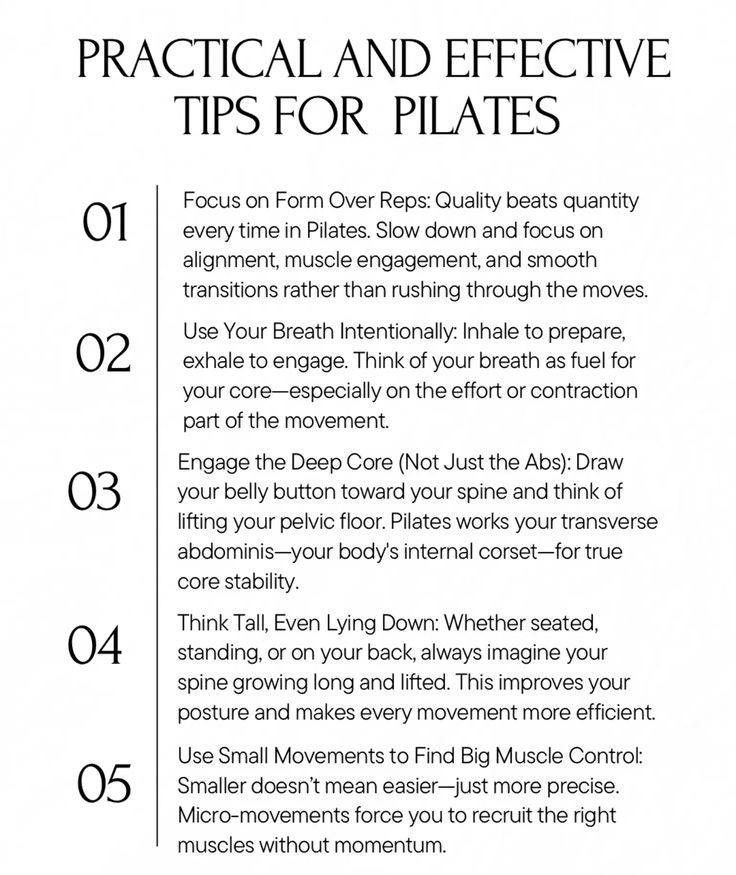
1. Focus on Form Over Reps
One of the biggest beginner mistakes in Pilates is rushing through exercises. In Pilates, quality always beats quantity. It’s better to perform 5 slow, controlled repetitions with proper alignment than 15 rushed ones with poor form.
As a beginner, focus on:
- Keeping your spine neutral
- Moving slowly and with control
- Avoiding momentum
- Maintaining steady breathing
If something feels unstable or sloppy, pause and reset. Building strong foundations now prevents injury and speeds up progress later.
2. Learn to Use Your Breath
Breathing is one of the most important Pilates fundamentals and many beginners overlook it.
A simple guideline:
- Inhale to prepare
- Exhale during effort or contraction
For example, exhale when lifting your head in an ab exercise or when pressing your legs away from your body.
Intentional breathing helps:
- Activate your core muscles
- Protect your lower back
- Improve focus and control
- Reduce neck and shoulder tension
If you ever feel strain, check your breath first.
3. Engage Your Deep Core (Not Just Your Abs)
Many beginners think Pilates is about tightening the stomach muscles. But true core strength comes from engaging the deep core muscles, especially the transverse abdominis. Think of this muscle as your body’s natural corset.
To activate it:
- Gently draw your belly button toward your spine
- Imagine lifting your pelvic floor or imagine curling your rib-cage down towards your hips
- Keep breathing - don’t hold your breath
You should feel a subtle tightening, not aggressive bracing. Deep core engagement stabilizes your spine and makes every movement more effective.
4. Think Tall - Even on the Mat
Posture matters in every Pilates position even when you’re lying down.
As a beginner, constantly remind yourself to:
- Lengthen through the crown of your head
- Keep your shoulders relaxed
- Avoid collapsing into your lower back
Imagine your spine growing long and lifted. This simple mindset improves posture, strengthens back muscles, and makes each exercise more efficient.
Pilates is about length and strength working together.
5. Use Small Movements to Build Control
In Pilates, smaller movements are often more powerful.
As a beginner, don’t worry about lifting higher or stretching further. Focus instead on small, controlled movements that challenge stability.
Micro-movements:
- Prevent momentum
- Force correct muscle activation
- Improve coordination
- Build foundational strength
If an exercise feels easy, try slowing it down before making it bigger.
How Beginners Can See Faster Results in Pilates
To get the most out of your Pilates practice:
- Practice 2–4 times per week
- Prioritize consistency over intensity
- Focus on technique before progression
- Listen to your body
Remember, Pilates is not about pushing through pain. It’s about building strength intelligently and sustainably.
Final Thoughts: Start Simple, Stay Consistent
If you’re new to Pilates, don’t overcomplicate it. Master the basics first:
✔ Focus on form
✔ Breathe intentionally
✔ Engage your deep core
✔ Maintain length in your spine
✔ Move with precision
With consistent practice, you’ll notice stronger abs, better posture, improved balance, and more body awareness - all without high-impact strain.
Are you ready to get started with your first class? Book your session here!